Maslow's Herarchy of Needs
Back in the 1940’s Abraham Maslow, a professor at Columbia University, decided to conduct a study of lab rats to see what is more important to them, food or water. So after denying them these things for a few days, he put the rats into a cage with both items. Almost 99 % of the rats chose water first.
Then he decided to try some tests on a type of 'lab rat' known as a 'university student'. He expanded the things that he denied the students to see which items they wanted first. In other words, which items did they need the most. This relationship has been shown in his Hierarchy of Needs.
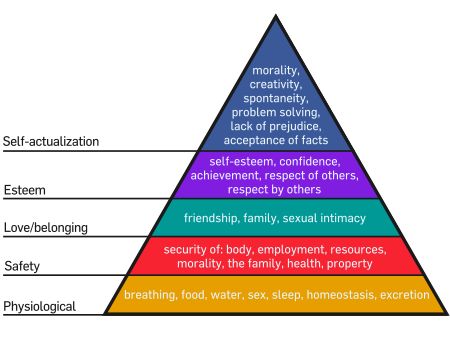
The most interesting thing about this is that after a person’s biological needs are met, they consider the other things, which are really just wants to become ‘needs’ in their minds.
The 4 levels above Physiological are essentially ‘wants’ not needs, however once one level of need is fulfilled the person perceives the next level as being a ‘need’ when it is really just a want.
This means that many, many people will 'feel' that they need a product or service when they only 'want' this products or service.
They will still make the purchase because they will think of a reason why they 'need' the item.
I saw an ad recently that advertised Hotel Rooms, but the print ad said little about the room and a great deal about 'Reviving Your Self' and 'Where Sophistication Leads to Relaxation'...all of them emotions.
Pareto's Priciple
The 80%-20% Rule
Back in the 1910’s an Italian economist called Vilfredo Pareto, did a study and discovered that, in Italy, 20% of the people owned 80% of the land. These were mainly the nobility and the royalty. He also found that 80% of the people only owned 20% of the land.
Mr. Paretos did not think that this was a good economic policy.
In the 1970’s someone came across this 80%-20% rule, and did a study on a consumer product called Coca~Cola. He found that 80% of the people who buy Coke buy about 20% of the Coke that is sold. In addition, he found that 20% of the people who buy Coke buy 80% of the Coke that is sold.
If we assume that the 80% of the people who buy Coke did so because of the physiological reason that why were thirsty, then why did the other people buy all that Coke?
Could it be for some emotional reason ?
If so, what emotion is motivating them to make those purchases.
I have listed some of the emotions that I know of here:
Acceptance Envy Hysteria
Affection Embarrassment Interest
Aggression Euphoria Loneliness
Ambivalence Forgiveness Love
Apathy Frustration Paranoia
Anxiety Gratitude Pity
Boredom Grief Pleasure
Compassion Guilt Pride
Confusion Hatred Rage
Contempt Hope Regret
Depression Horror Remorse
Doubt Hostility Shame
Ecstasy Homesickness Suffering
Empathy Hunger Sympathy
But what emotions are getting peope to buy products ?